
Comparative Analysis of DeFi Approaches
Centralized vs. Decentralized Protocol Designs
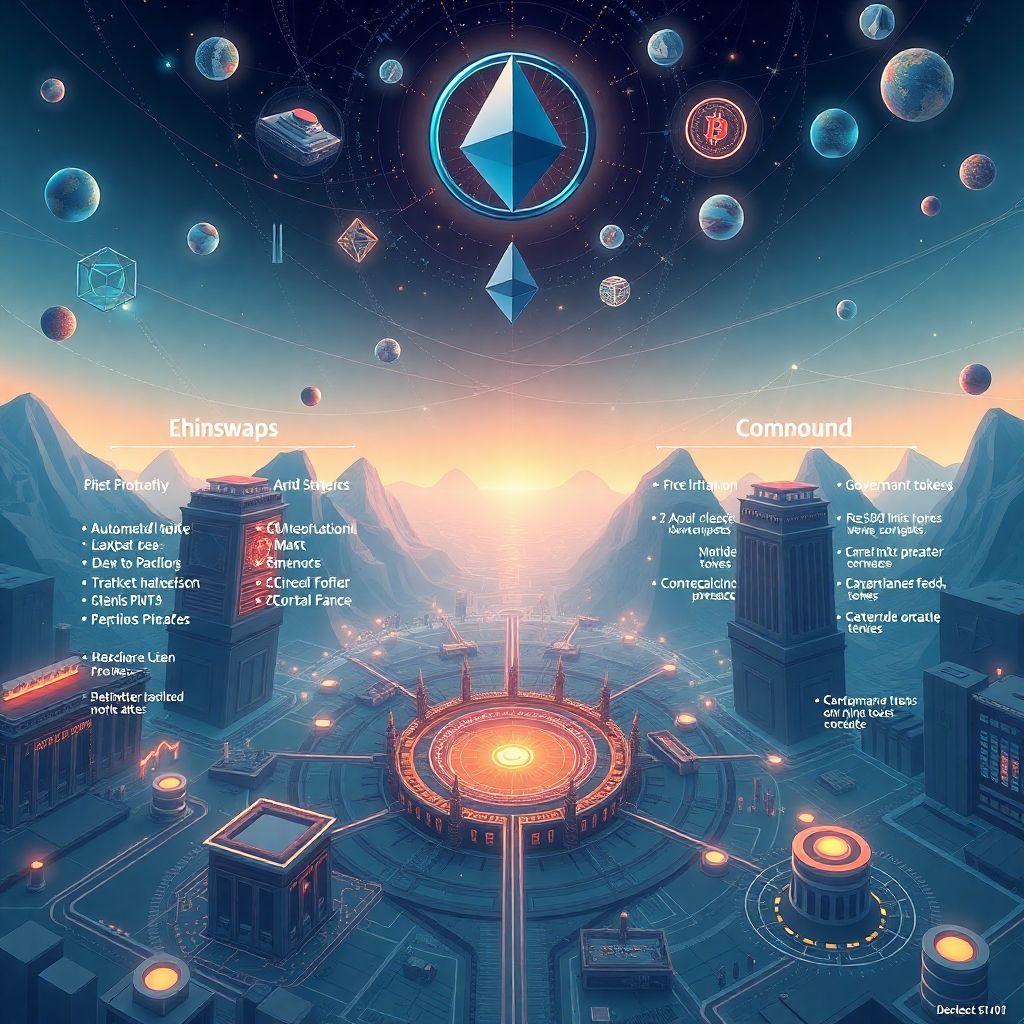
Decentralized Finance (DeFi) operates on a spectrum ranging from fully decentralized autonomous protocols to semi-centralized platforms with built-in governance layers. On one end, protocols like Uniswap leverage automated market makers (AMMs) to execute trades through liquidity pools, eliminating intermediaries entirely. On the opposite side, we observe services like Compound, which incorporate on-chain governance but rely on centralized oracles that introduce potential single points of failure. The divergence in design philosophy affects accessibility, scalability, and resistance to censorship, making architectural decisions crucial depending on the target use case.
Smart Contract Architectures and Layer Solutions
The underlying smart contract architecture significantly influences protocol efficiency and security. Ethereum remains the dominant platform due to its mature tooling and broad community support. However, congestion and high gas fees have led to the rise of Layer 2 solutions like Optimism and zkSync. These systems employ rollups — either optimistic or zk-based — to bundle transactions off-chain and submit proofs to the mainnet. Rollup-based DeFi applications achieve higher throughput and lower latency, although they face limitations in interoperability and UX complexity due to bridging mechanisms and withdrawal delays.
Oracle Mechanisms and Price Feed Integrity
Accurate price feeds are vital for the proper function of lending, trading, and synthetic asset platforms. Chainlink introduced a decentralized oracle network that aggregates data from diverse sources, reducing manipulation risk. In contrast, some protocols implement native oracles, sacrificing decentralization for cost-effectiveness and simplicity. Hybrid approaches are emerging, where protocols combine on-chain data aggregation with cryptographic proofs to enhance robustness. The choice of oracle design directly impacts the protocol’s vulnerability to manipulation attacks like flash loan exploits, which remain a critical security concern across the DeFi ecosystem.
Evaluating Technological Trade-Offs
Advantages of Fully Decentralized Systems
The primary advantage of fully decentralized DeFi protocols lies in their censorship resistance and minimization of trust assumptions. By eliminating intermediaries and central control, these systems align strongly with the ethos of blockchain. Furthermore, smart contracts enforce logic deterministically, ensuring transparency and reducing reliance on legal enforcement. However, immutability also introduces inflexibility — any critical bug or economic exploit often leads to irrevocable consequences, as seen in incidents like the 2020 Harvest Finance attack.
Limitations of Current DeFi Designs
Despite their innovation, DeFi platforms face persistent challenges: front-running, MEV (Miner Extractable Value), poor UX for non-technical users, and capital inefficiency. Liquidity fragmentation across multiple chains and platforms hampers composability and increases systemic risk. Moreover, the reliance on volatile collateral in over-collateralized lending protocols limits mainstream adoption. Certain risk mitigation strategies, such as protocol-controlled value (PCV) or algorithmic monetary policies, have shown mixed results — with some, like Terra’s collapse, exposing the fragility of algorithmic mechanisms in extreme market conditions.
Guidelines for Selecting a DeFi Protocol
Assessing Security and Code Audits
When evaluating a DeFi project, the foremost consideration should be its security posture. Protocols with multiple independent audits, formal verification, and bug bounty programs demonstrate a higher commitment to reliability. Open-source codebases with active repositories allow community scrutiny, while time-tested platforms with significant total value locked (TVL) present lower relative risks. However, users must remain vigilant, as even audited projects can harbor latent vulnerabilities, especially under novel attack vectors.
Governance Models and Tokenomics

Decentralized governance introduces both opportunities and challenges. Token-based governance (e.g., Compound’s COMP or Aave’s AAVE) allows stakeholders to steer development, yet often suffers from voter apathy and plutocratic control. DAO (Decentralized Autonomous Organization) maturity varies significantly — some act as rubber stamps for developer decisions, while others embrace structured proposals and treasury management. Prospective users should examine a protocol’s governance history, token distribution models, and incentives to ensure alignment with long-term sustainability and community interests.
Emerging Trends in DeFi 2025
Cross-Chain Liquidity and Interoperability
In 2025, DeFi ecosystems are converging through cross-chain protocols and liquidity layers. Projects like Thorchain and LayerZero are enabling seamless asset transfers and contract calls across heterogeneous chains. Native cross-chain swaps without wrapped assets are gaining traction, addressing composability constraints and unlocking new yield strategies. However, cross-chain bridge vulnerabilities remain a top target for hackers, requiring robust risk management frameworks and real-time monitoring systems.
Integration of Real-World Assets (RWA)
Tokenization of real-world assets, including treasury bonds, invoices, and real estate, is becoming a cornerstone of next-generation DeFi. Platforms like Centrifuge and Maple Finance are bridging TradFi instruments with blockchain-native yield farming. This integration promises enhanced capital efficiency and diversification, though it introduces regulatory complexity and off-chain legal enforcement dependencies. Institutional-grade DeFi infrastructure, equipped with KYC modules and permissioned pools, is likely to coexist with permissionless alternatives, reshaping the boundaries between traditional and decentralized finance.
AI and Autonomous Agents in DeFi

Artificial Intelligence is beginning to influence DeFi through autonomous trading agents, predictive analytics for risk management, and optimization of liquidity allocation. AI-driven vaults can adjust strategies in real time based on market volatility, oracle anomalies, or governance events. While this adds sophistication, it raises concerns related to algorithm transparency and unintended feedback loops. As DeFi protocols become more complex, ensuring explainability and control over AI models will be paramount for maintaining user trust and mitigating systemic instability.
Conclusion
DeFi is no longer a monolithic concept but a diverse and evolving domain encompassing multiple solution paradigms. Each approach — from minimalistic smart contract primitives to sophisticated cross-chain systems — carries distinct advantages and trade-offs. As the sector matures, protocol design will need to balance security, efficiency, and usability while navigating regulatory landscapes. Informed users and developers must critically assess each system’s architecture, trust assumptions, and governance mechanisms to harness the full potential of decentralized finance responsibly.
Комментарии